Jelcz GCBM COMANDO1 V1.0.0.0 FS25

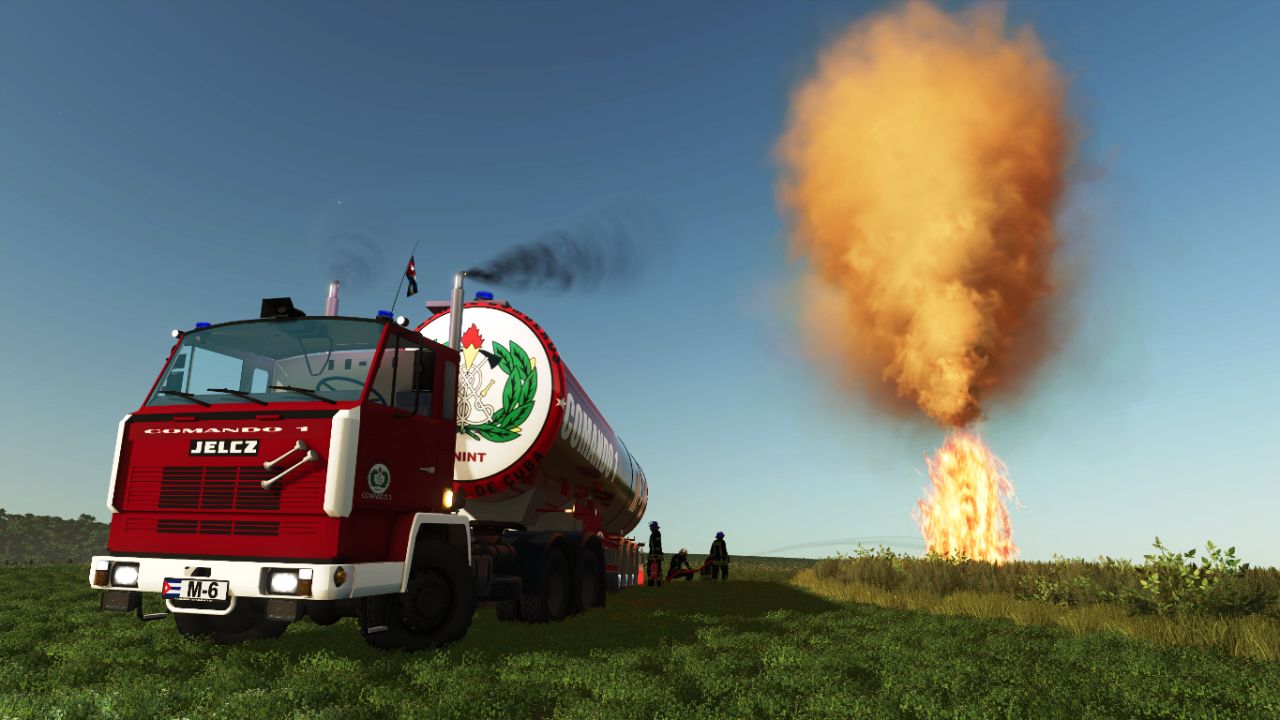
Jelcz GCBM COMANDO1 V1.0.0.0 FS25
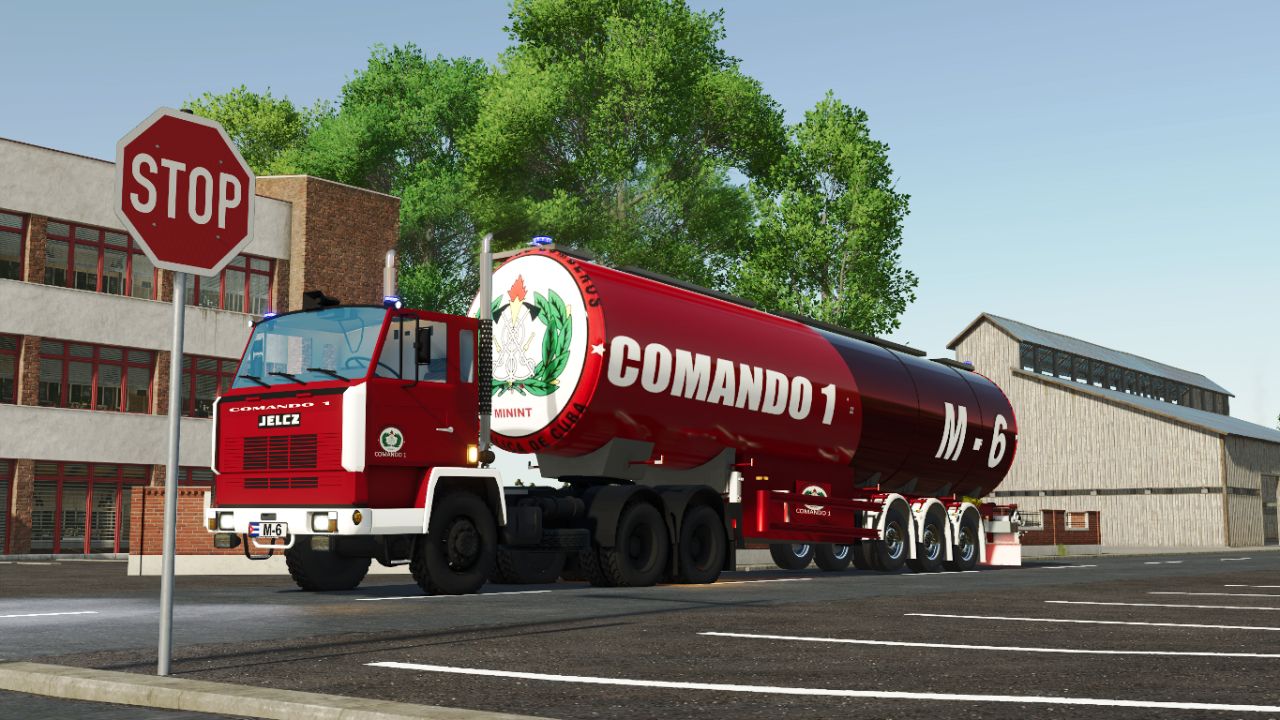
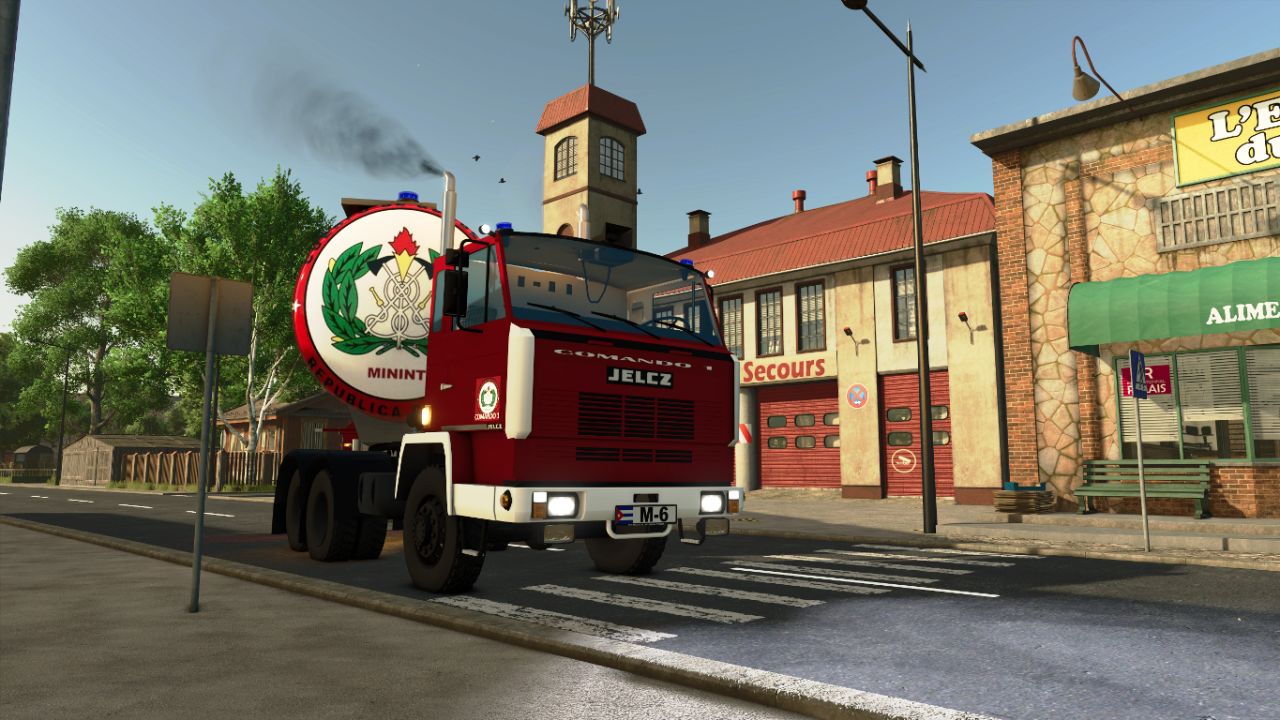
An adaptation of the Jelcz GCBM (a heavy tractor-semitrailer water tanker holding roughly 18,000 liters) for the firefighters of Cuba combines the high-volume water transport capabilities of the Polish design with visual, operational, and mechanical characteristics suited to emergency units on the island.
1. Visual Identity and Lettering Adapted for Cuba
Color Scheme: Emergency red across the tractor cab and cylindrical tanker semitrailer, paired with white or yellow reflective striping along the chassis and tank perimeter to improve visibility at night or on poorly lit roads.
Lettering and Markings: Spanish lettering reading “BOMBEROS” (often displayed in mirror script on the front of the cab so it reads correctly in rearview mirrors), unit numbering (such as C-1, Cisterna, or provincial/industrial codes), and clear capacity markings in liters.
Warning and Work Lights: Emergency beacons, side marker lights along the semitrailer, and rear work lights illuminating the valve and hose stations for night operations.
2. Operational Role and Water Supply
High-Volume Support: With roughly 18,000 liters of water, its primary role is serving as a bulk water tender supplying attack fire engines or portable pumps during major incidents—such as industrial facilities, warehouses, port areas, or forest/agricultural fires—where hydrant pressure or flow is limited or unavailable.
Manifolds and Couplings: A protected rear or side control panel equipped with intake and discharge valves, pressure gauges, hose lengths, and fittings compatible with local pumping gear, allowing simultaneous supply to multiple fire units.
Emergency Logistics: Tanker design featuring a top manway, ladder, and non-slip catwalk to support inspection, cleaning, and rapid refilling from hydrants, storage tanks, or open water sources.
3. Chassis, Mechanics, and Operating Environment
Articulated Rig: Built around a heavy tractor unit (such as a Jelcz 417 with 4×2 drive and an ~11-liter diesel engine producing roughly 240 HP) coupled to a tanker semitrailer, emphasizing straightforward mechanics and accessible maintenance points.
Climate and Road Conditions: In hot, humid tropical conditions, reliable engine cooling and well-maintained air brake lines are essential. Because an articulated tanker semitrailer has a longer wheelbase and wider turning radius than a rigid truck, it is best suited to main avenues, industrial corridors, highways, and open staging points, while shorter rigid apparatus handle narrow streets or tight access routes.
karl zu